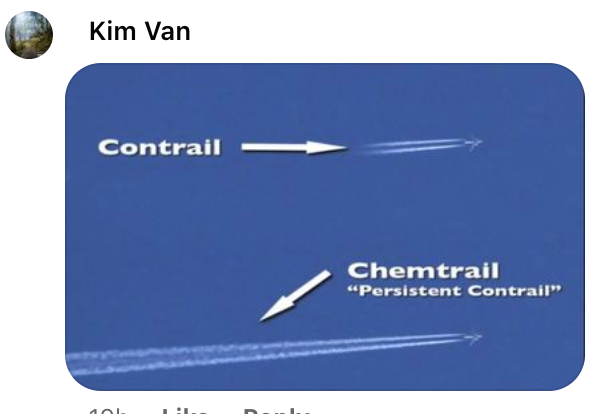
We have all seen photos and videos showing one plane making a trail and another near it not making one.
This is not because one is a chemtrail plane and the other is not. Some will say this is how to tell a contrail from a chemtrail. This is false because all trails use the same fuel. In modern times, all trails are chemtrails; it is the humidity that controls the length of time they last.
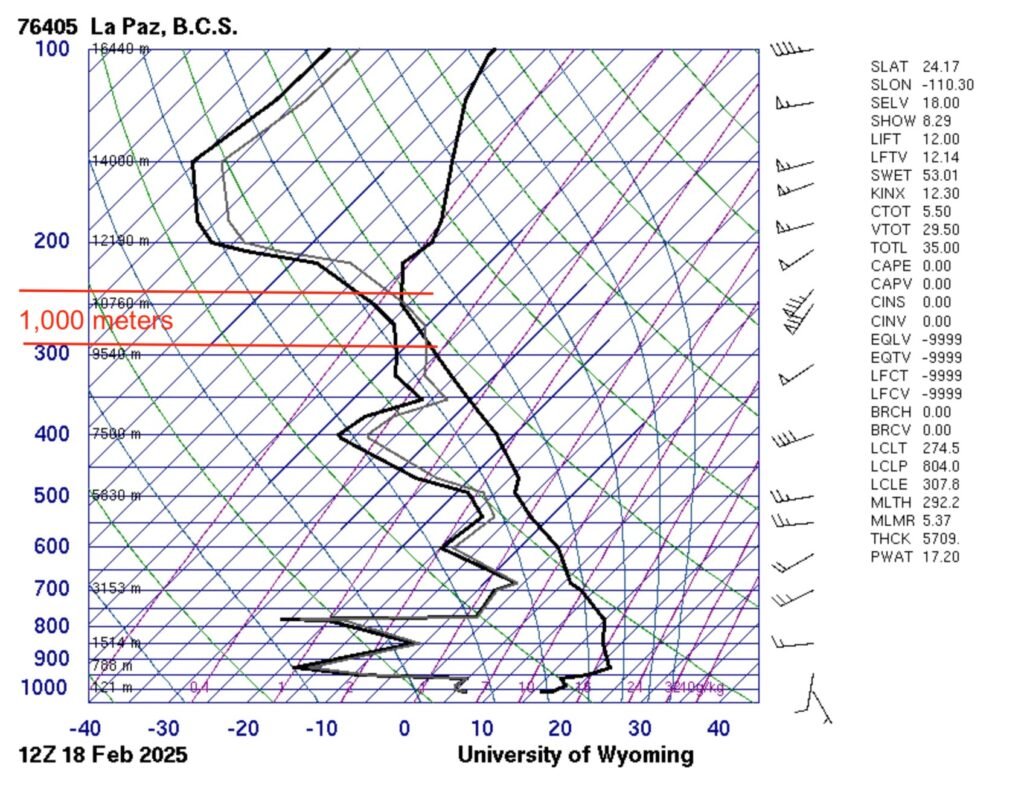
The controlling factor for the growth of a trail is the RHice, but the humid layer is usually very thin.
This graph shows the atmospheric conditions from the ground up.
Where the temperature line on the right touches the thin ice line in the centre, that is the height at which saturation is present.
Trails are able to form on this day between 9,600 and 10,800 meters only; any plane travelling slightly higher or lower will not leave a trail, even when using modern fuel with hygroscopic particles.
From the ground, planes are roughly 7 miles high. At that distance, it is impossible to tell how high one is compared to another plane which is nearby.
However, the distance between the planes for safety must be more than 1,000 meters. This can easily mean one plane is in the “sweet spot” for making trails while another nearby plane is actually higher or lower than the thin humid layer of air that can make trails.
Chemtrails are enhanced contrails. While chemtrails can grow in less humidity than contrails used to, they still require relatively high humidity to work.
This is why we sometimes see one plane leaving a long-lasting trail while another plane nearby is leaving a much shorter trail that dissipates quickly.
This is not proof that one plane is a chemtrailer and the other is not. That is an error that feeds into the lies of purposeful spraying of secret chemicals by special planes.