Key Takeaways
- Persistent trails spread into cirrus-like clouds that trap heat at night.
- Modern aviation cirrus has a large impact on local and regional weather.
- The largest single climate impact from aviation.
- The effect is real and measurable, but it is unintentional, a side-effect of normal flying.
- Reducing it is possible through fuel changes and smarter flight routing.
The earlier NASA study recorded trails rising at 10 centimetres per second, and a 2021 study by Gao confirms how the heat from the sun can be used to make the particles left by ordinary plane exhaust rise and stay aloft for many days.
Simulations have found that only 10 micrograms per meter of black carbon in the exhaust plume is enough to raise material well into the stratosphere.
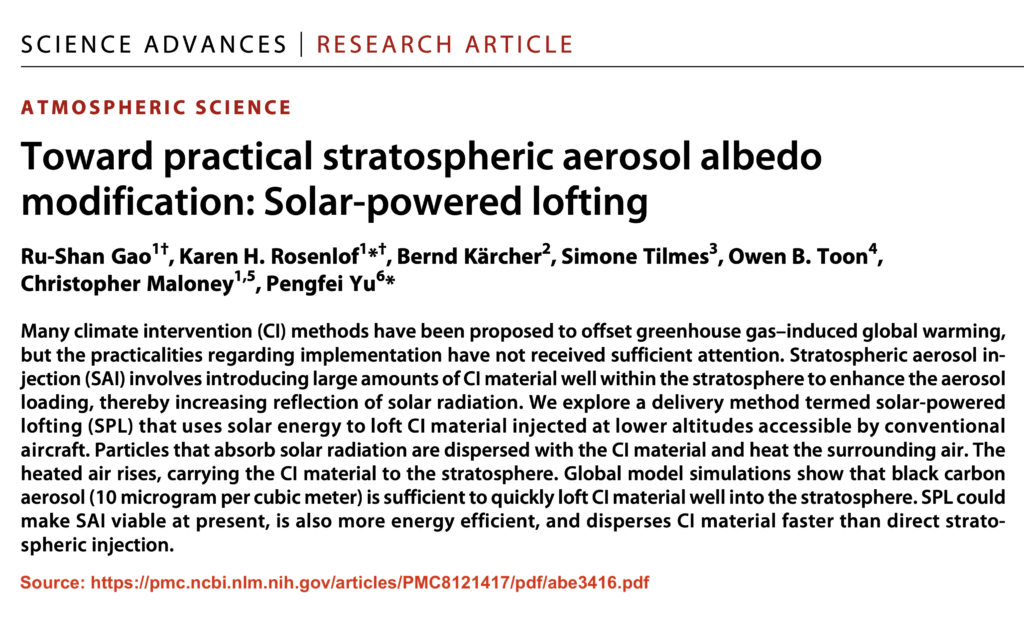
Once in the stratosphere, they are able to travel far from where they were made.
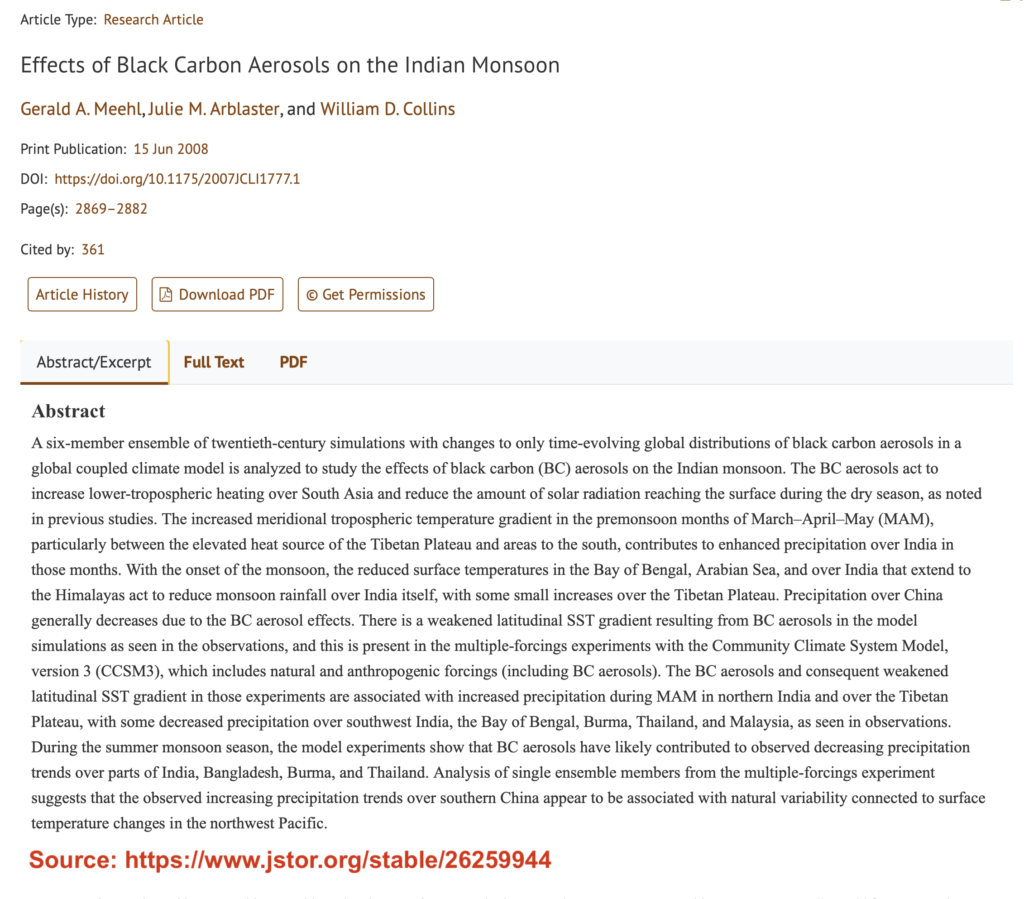
A 2008 study by Meehl found that the effect of atmospheric black carbon changed the Asian monsoon season.
It was found that the rainfall over parts of India, Bangladesh, Burma, and Thailand decreased while it increased over Southern China.
These findings were confirmed in his 2009 study.
These changes in world climate were noted in a 2020 study by Xie, which reports distinct responses of the Asian summer monsoon and atmospheric temperature to black carbon aerosols and greenhouse gases, but black carbon aerosols had a greater influence than greenhouse gases.
The impact of black carbon aerosols on monsoon circulation is far greater than previously understood, challenging assumptions that low-level thermal feedbacks were the main driver of monsoon changes. Trails are a far greater influence than CO2.

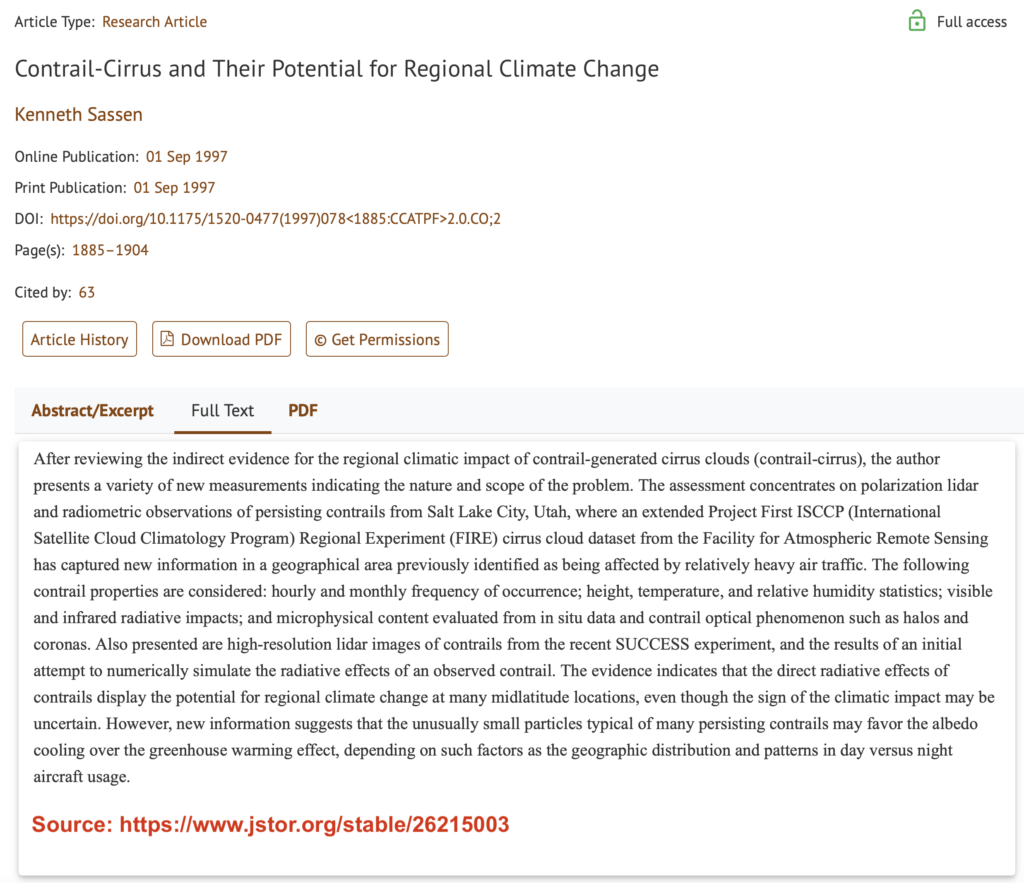
A 1997 study by Sassen reports “The evidence indicates that the direct radiative effects of contrails display the potential for regional climate change at many midlatitude locations.”
This was also confirmed in a 2009 study by Haywood in which the radiative forcing of a single trail was measured as being 10 w/m2 during the day and 30 w/m2 at night.
A 2010 report by MIT for the IPCC estimated the radiative forcing of CO2 as 1.6 w/m2.
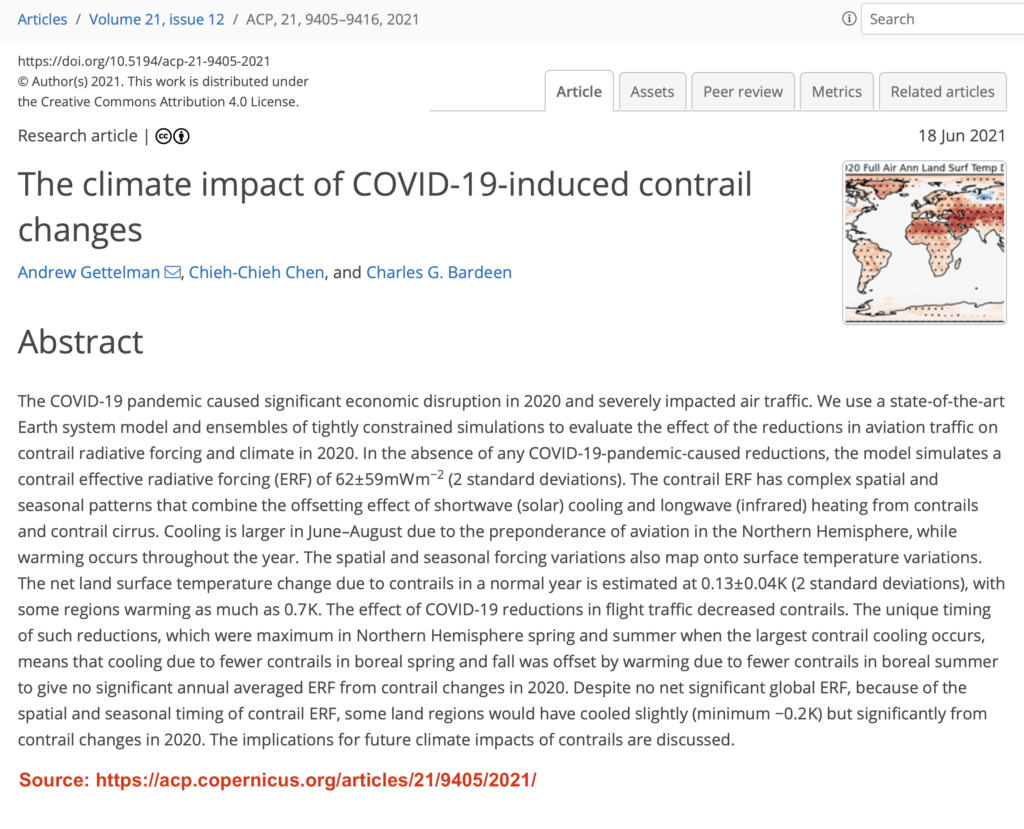
A study by Gettelman found considerable changes in weather during the lockdown of 2020.
COVID lockdowns were a natural experiment. This confirms the understanding of the dramatic effects on the climate from trails.
Trails are thin, high clouds that cool the surface by reflecting sunlight in summer but warm it by trapping heat in winter. The COVID-19 lockdown revealed this seasonal tug-of-war by temporarily removing contrails and exposing their hidden influence on regional weather patterns.
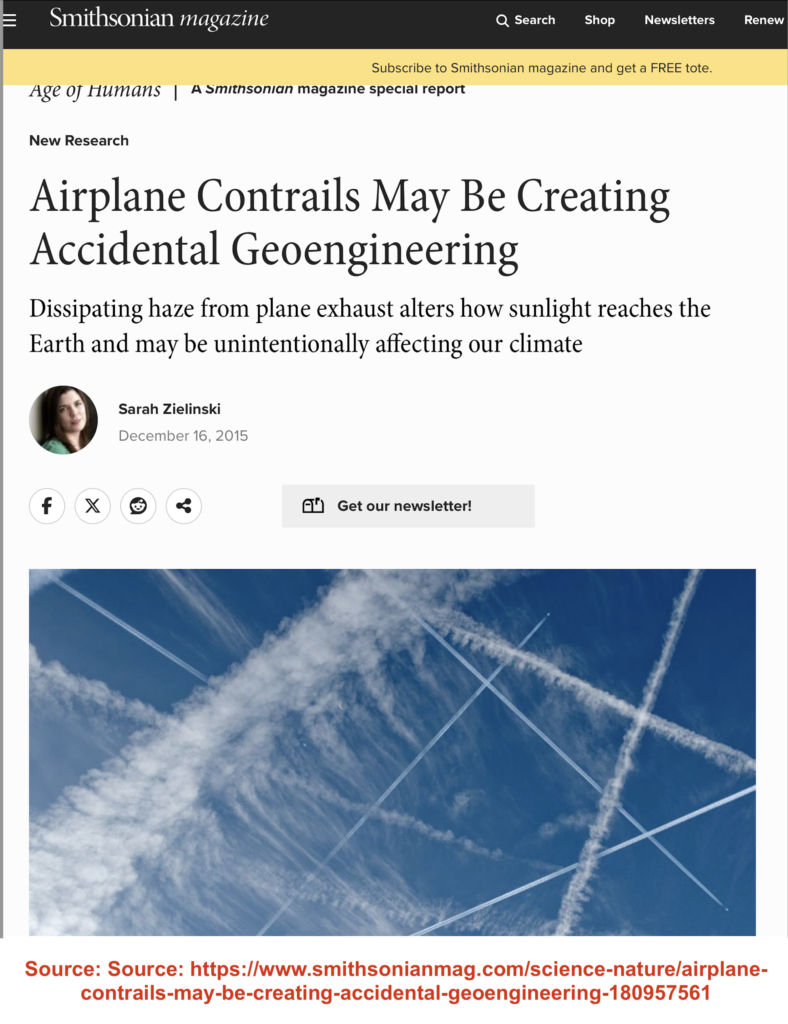
This article by Zelenski (2015) for Smithsonian Magazine explains that aeroplane contrails are causing “accidental geoengineering” by whitening the blue sky. Charles Long from NOAA confirmed this idea, saying, “We might be actually conducting some unintentional geoengineering here.”
The issue of “Global Dimming” was first noticed when scientists observed a decrease in sunlight reaching the Earth.
After confirming the Sun’s output hadn’t changed, they concluded that aviation aerosols from regular airliner exhaust were altering the atmosphere and blocking sunlight.
These aerosol particles, which act as ice nuclei, stay in the sky long after the trail disappears and scatter sunlight, sometimes creating visible halos around the Sun.
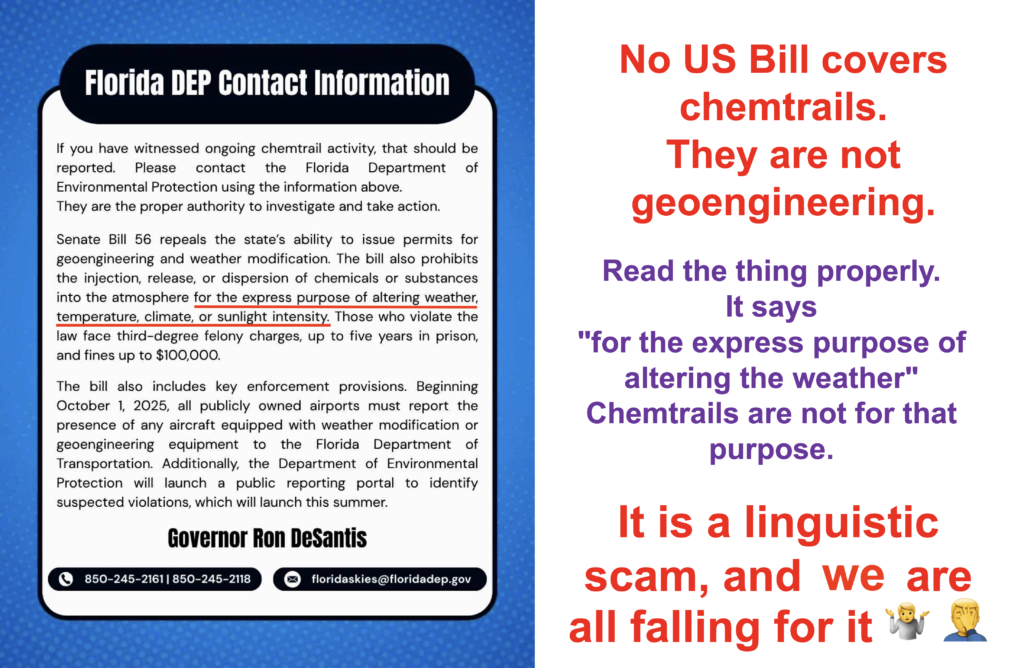
This confusion over intentional and unintentional geoengineering is the reason none of the recent US Bills has succeeded in preventing chemtrails.
The bills are written to exclude unintentional geoengineering. Even though trails from ordinary commercial airliners are very effective at altering the climate, they are not done with that intention. The intention of the flights is to carry passengers from one place to another, so trails are not geoengineering.
We can see that trails are responsible for major changes in the climate. Locally, we often see them change our days from sunshine to cloudy, but they can also rise high into the stratosphere and cause major climate changes far from where they were made.
They cause an increase in surface temperatures and have a far greater local radiative forcing effect than does CO2. During lockdown, a decrease in temperature was noted, and the changes in climate patterns caused were exposed.