Key Takeaways
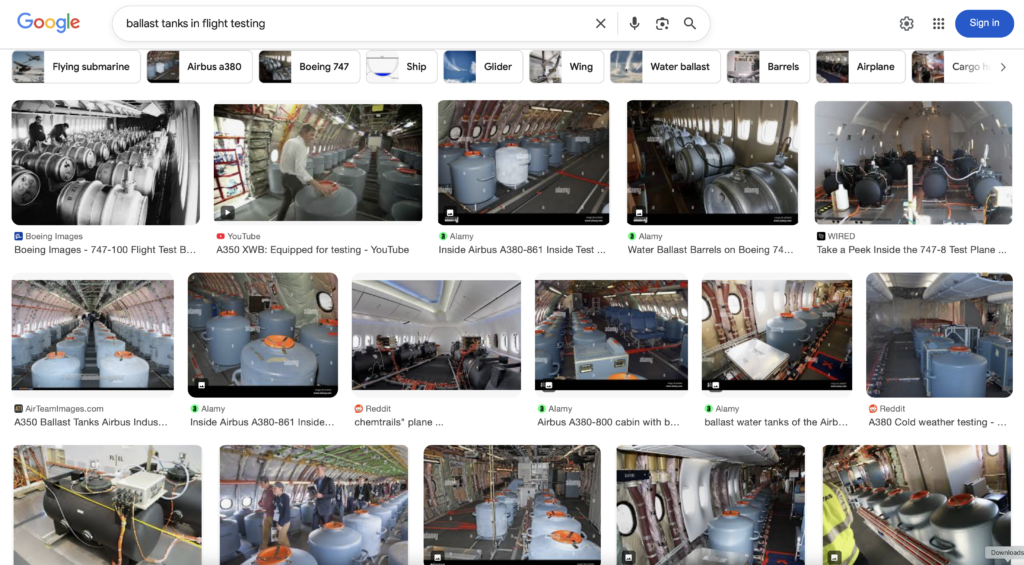
- Ballast tanks are real devices used only during test flights by aircraft manufacturers (Boeing, Airbus, etc.).
- They are filled with water to safely test how the plane handles different weight distributions and centre-of-gravity positions.
- They are not used on commercial passenger or cargo flights.
- Claims that ballast tanks are “chemtrail sprayers” come from combining several misunderstandings (aerodynamic trails mistaken for spraying, “turbofans can’t make trails”, etc.).
- This is a classic example of how multiple wrong assumptions can build a seemingly convincing but false narrative.
Ballast Tanks
Ballast tanks are used by aircraft manufacturers during flight testing. They allow engineers to safely adjust the plane’s weight and centre of gravity by filling tanks with water. This simulates different passenger and cargo loads so they can test stability and performance under extreme conditions.These tanks are only used on test flights — never on regular commercial airliners carrying passengers or freight.
How the Misinformation Spreads
The idea that ballast tanks are secret chemtrail sprayers only seems plausible if you first accept several other incorrect claims:
- That aerodynamic trails (wing-tip vortices) are actually “wing sprayers”.
- That modern high-bypass turbofan engines “can’t make persistent contrails”.
- That any unusual-looking feature on a test aircraft must be part of a spraying system.
In reality, ballast tanks are simply engineering tools for safe aircraft testing. They have nothing to do with the persistent trails people see on normal flights. Those are explained by changes in jet fuel composition and atmospheric conditions, as covered on the other pages of this site.