Key Takeaways
- Modern high-bypass turbofan engines do produce trails.
- The claim that “turbofans cannot make trails” is a widespread myth.
One of the often repeated claims in chemtrail communities is that modern high-bypass turbofan engines “cannot make persistent contrails.” This idea is incorrect.
Here is a clear example of a modern high-bypass turbofan engine producing a persistent contrail right after takeoff:
Yes, you can get trails on takeoff if it is cold enough, below -45 C.
I have seen people say, “they turned on the chemtrail button too quickly”.
How the Myth is Kept Alive
Despite clear evidence, some of the largest chemtrail pages continue to promote this false idea. For example, Global Skywatch and associated accounts frequently claim high-bypass turbofans “cannot make persistent trails.”
Please don’t fall for these ideas; they are not necessary and lead to being ridiculed by experts.
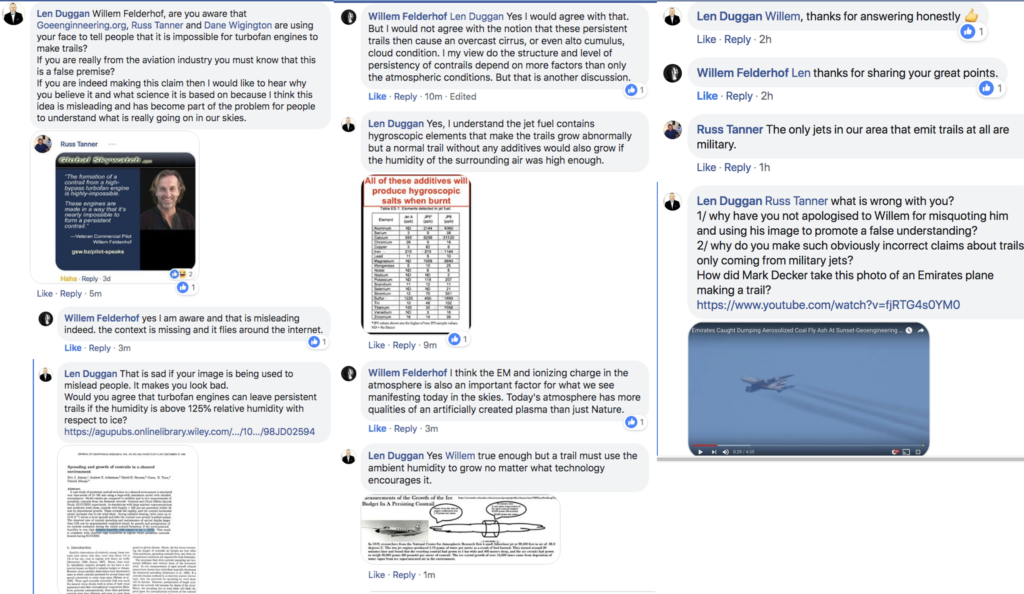
When challenged with evidence (including direct replies from pilot Willem Felderhof himself saying the context was missing), the response was to block critics rather than correct the information.
Here is part of that conversation (with Russ Tanner from Global Skywatch and Willem Felderhof).
Dane Wigington (owner of Geoengineeringwatch.org) was also tagged but did not respond.
This pattern, repeating known inaccuracies and blocking people who provide contrary evidence, is concerning. It suggests these large accounts are more interested in protecting their narrative than in accuracy. New people researching persistent trails often trust these sources first, which makes correcting the record especially important. This type of misinforming is known as gatekeeping.
Bottom line: Modern turbofan engines do make trails. The real change people see is due to shifts in jet fuel composition, as explained on the other pages of this site.